Premier Cru — the New Grand Cru?


Few wine regions inspire debate quite like Burgundy, where the question of what matters most — place or producer — never seems fully settled. Top sites have been carved out and prized for centuries, often inspiring reverence, extensive discussion, and rabidly passionate collectors. The Napoleonic Code of inheritance over generations led to fractured vineyard ownership, creating a mosaic of parcels, sometimes with multiple growers working the same row. In this context, the central question remains: does the terroir reign supreme, or is the key the hands that shape it? And considering both elements, in today’s world, do historic hierarchies still stand?
Origins of Classification
Burgundy’s classification system is born from centuries of observation rather than a single governing decree. The region’s original grape-growers, Benedictine and Cistercian monks, began recording the qualities of vineyard plots as early as the Middle Ages, laying the groundwork for today’s concept of climats. Their informal hierarchies were the basis for Burgundy’s AOC system created in the 1930s, which officially established Grand Cru, Premier Cru, village, and regional designations. Understandably, prestige followed top classification, and top prices followed prestige. While this system does reflect historic reputation and long-term performance, it has remained largely static — a strength for preserving tradition, yes, but a limitation when considering modern viticulture, climate change, and evolving standards of excellence.

Grand Cru (GC) is Burgundy’s highest level, with only 33 vineyards yielding 1% of total production. But not all Grand Crus are created equal. In today’s market, some sites benefit more from classification inertia than from consistent performance. Clos de Vougeot is the most frequently cited example: sprawling, heterogeneous, and farmed by dozens of producers, its wines range from transcendent to merely good — yet its Grand Cru designation ensures high prices across the board. Similar critiques are sometimes leveled at Charmes-Chambertin and Mazoyères-Chambertin, whose best producers can craft stunning wines, but whose average bottlings can struggle to justify their GC pricing, particularly when compared to elite Premier Crus.
This is not to say these vineyards can’t produce exceptional wine — they clearly can — but the Grand Cru label can mask variability and inflate expectations. The Premier Cru (PC) category is still quite exclusive, at 10% of Burgundy’s production—but with 640 vineyards, some navigation is necessary, as variation swings even wider with PC. For many savvy buyers, producer reputation increasingly matters more than the classification alone, but there are four notable PC vineyards worth mentioning.
Four Premier Crus That Overdeliver
Clos Saint-Jacques (Gevrey-Chambertin)
Widely regarded as one of Burgundy’s most formidable Premier Crus, Clos Saint-Jacques frequently rivals (and sometimes surpasses) Grand Crus in both quality and market performance. Domaine Armand Rousseau’s CSJ is a prime example, often more expensive than some of their Grand Crus, including their iconic Chambertin.

This reputation does come at a cost. From top producers, Clos Saint-Jacques is generally priced exceptionally high for a Premier Cru, often approaching or exceeding Grand Cru levels. Rousseau’s typically retails in the U.S. for $1,600–$1,800+, while more accessible examples from producers like Louis Jadot fall closer to $250–$500 for recent vintages. On the secondary market, quality bottlings frequently trade in the $600–$800 range — firmly within Grand Cru territory.
Les Amoureuses (Chambolle-Musigny)
Long discussed as a vineyard worthy of Grand Cru status, Les Amoureuses owes its reputation to both its proximity to Musigny GC and its consistently exceptional quality. Bottlings from producers such as Domaine de Vogüé and Domaine Roumier are highly sought after and widely considered benchmarks of Chambolle-Musigny.
That renown is reflected in pricing. In the U.S. market, strong Les Amoureuses regularly retail for $750–$900+, while older or rare bottles can climb quickly into the multiple thousands on the secondary market, reinforcing its near–Grand Cru stature.
Les Beaux Monts (Vosne-Romanée)
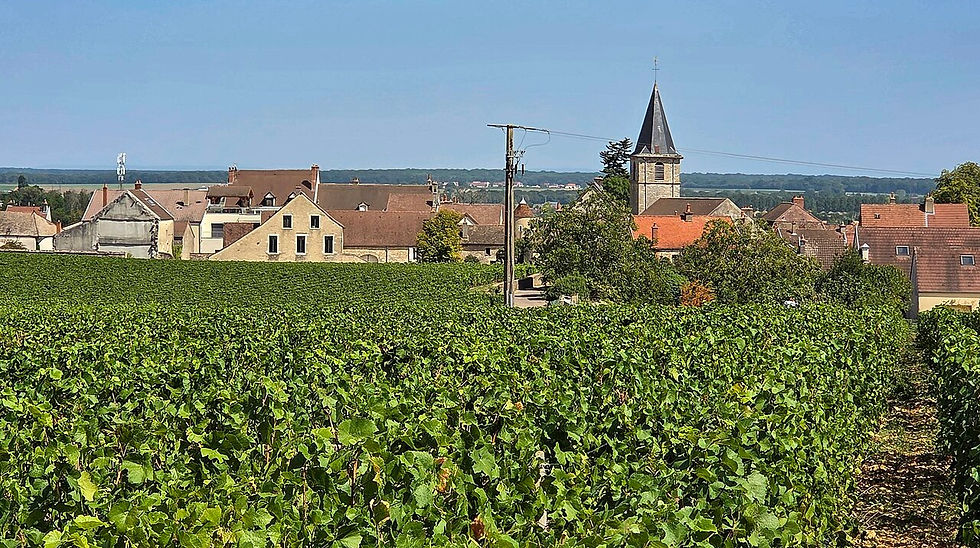
Les Beaux Monts exemplifies the overall unusually high caliber of Vosne-Romanée PCs. Bottlings from Louis Jadot offer a clear expression of the site’s pedigree, while Domaine Jean Grivot’s wines consistently earn critical praise. Domaine Leroy’s Les Beaux Monts has also demonstrated notable market performance, with certain vintages showing dramatic appreciation.
Pricing here varies widely by producer and vintage. Fine examples from producers like Domaine Dujac can trade from the high hundreds into the several-thousand-dollar range, while more accessible bottles remain available around $200–$500 retail. That said, Les Beaux Monts can be subject to price volatility, with producer reputation sometimes driving values as much as — or more than — terroir alone.
Lavaux-Saint-Jacques (Gevrey-Chambertin)
Often overshadowed by Clos Saint-Jacques, Lavaux-Saint-Jacques nonetheless delivers depth, structure, and aging potential that make it a compelling value play among PCs. Retail pricing is generally more restrained, with solid examples from producers like Louis Jadot around $200–$300, while top-tier bottlings, including those from Armand Rousseau, can reach $800–$900+ on the secondary market.
Beyond the Cru Ladder
At the opposite end of the spectrum are village-level lieux-dits whose reputation, quality, and pricing increasingly rival Premier Crus, and occasionally even Grand Crus. In Vosne-Romanée, Aux Malconsorts (once village-level before partial Premier Cru recognition) illustrates how terroir excellence can outgrow its administrative category. In Gevrey-Chambertin, sites like En Champs and En Ergot routinely deliver structure and depth far beyond typical village wines when farmed by top producers. Chambolle-Musigny lieux-dits such as Les Bas-Doix and Derrière la Grange offer aromatic precision and finesse reminiscent of nearby PCs, often at a fraction of the cost.

Perhaps the most compelling challenge to Burgundy’s hierarchy comes from producers who simply ignore the cru ladder altogether. Growers like Domaine Mugnier, Domaine Dujac, and Domaine Trapet have shown that meticulous farming, low yields, and thoughtful élevage can raise village-level wines into the realm of serious collectibles, sometimes outperforming humbler Grand Crus from less attentive producers.
The takeaway for modern collectors is clear: classification is a starting point, not a verdict. Some of Burgundy’s most exciting — and intellectually honest — wines live at the intersection of great terroir and great hands, regardless of what the label says. And as climate change and technological shifts threaten to upend centuries-old classifications far sooner than many expect, savvy collectors would be wise to look beyond the label now, and to work with trusted experts when navigating what comes next.
We are available at any time to discuss your cellar management or investment needs, from Burgundy to beyond.


Comments